How to Start a Sports Card Collection – Beginner's Guide
How to Start a Sports Card Collection: A Beginner's Guide to Collecting Trading Cards
Discover the excitement of sports card collecting, learn what to look for, and start building a collection of your favorite players, teams, and sports.
There’s something exciting about opening a pack of sports cards. You never know which players, special editions, or unexpected favorites you might discover.
For some collectors, it's about finding cards featuring their favorite athletes. For others, it's about completing an entire team collection, discovering rookie cards, or preserving memories from memorable sporting events.
Whether you're a young sports fan, a parent introducing your child to collecting, or an adult rediscovering a childhood hobby, sports card collecting is an interest that can grow with you.
And the best part? You don't need expensive cards or a large budget to get started.
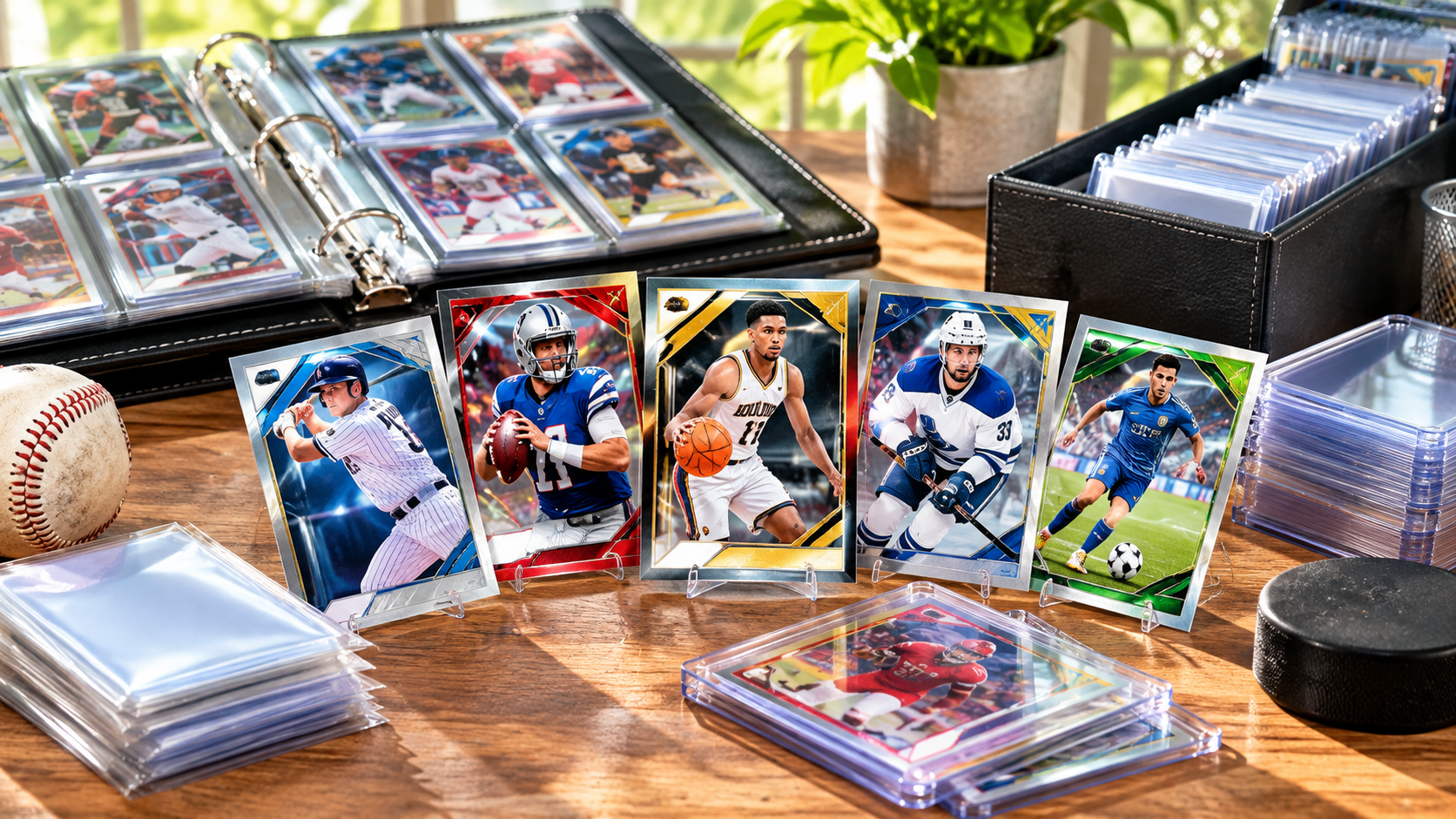
1. Choose What You Want to Collect
Before purchasing your first pack, think about what interests you most.
Sports card collecting isn't just about finding rare or expensive cards. It's about creating a collection that means something to you.
Collect by Sport
Some of the most popular types of sports trading cards include:
Football Cards: Collect your favorite quarterbacks, running backs, wide receivers, and defensive stars.
Baseball Cards: Discover legendary players, rising prospects, rookie cards, and historic teams.
Basketball Cards: Build a collection of NBA and WNBA players, emerging stars, and basketball legends.
Hockey Cards: Explore NHL players, rookie cards, and memorable moments on the ice.
Soccer Cards: Collect international stars, professional clubs, and tournament favorites.
You can focus on a single sport or explore several.
Collect by Player, Team, or Season
Another way to organize your collection is around something specific.
For example, you might:
Collect every card you can find featuring your favorite player.
Build a collection of your favorite NFL team.
Collect baseball cards from a particular season.
Find rookie cards of athletes you enjoy watching.
Collect cards featuring championship teams.
Build a collection of athletes who attended your favorite college.
Collector Tip: Start with one favorite team or player. It gives your collection a purpose and makes deciding which cards to buy much easier.
2. Understand the Different Types of Sports Cards
Not all sports trading cards are the same. As you explore the hobby, you'll encounter different types of cards with unique designs, features, and levels of rarity.
Base Cards
Base cards are the standard cards found within a particular trading card set. They typically feature an athlete's photograph, name, team, and sometimes statistics.
These are excellent starting points for beginners because many are relatively affordable and easy to find.
Rookie Cards
Rookie cards are generally associated with an athlete's first official trading card releases during their rookie period, although the exact designation varies by sport and card product.
Collectors often enjoy rookie cards because they represent an athlete's early professional career.
Some become highly sought after, while others remain inexpensive.
Insert Cards
Insert cards feature special designs or themes that differ from the regular base set.
They might highlight exceptional performances, memorable moments, or a particular group of athletes.
Parallel Cards
Parallel cards are variations of another card, often featuring different colors, finishes, patterns, or serial numbering.
For example, a regular card might have a silver-bordered variation or a limited gold edition.
Some parallels are more difficult to find than others.
Autographed Cards
Autographed cards feature an athlete's signature. Some are signed directly on the card, while others have an authenticated signature on an attached sticker.
Always pay attention to authentication when purchasing autographs.
Memorabilia and Relic Cards
These cards feature pieces of materials, such as jerseys or equipment.
Not every relic is game-used or player-worn, so read the manufacturer's description carefully.
Collector Tip: A card doesn't have to be rare to be special. Sometimes your favorite card is simply one that reminds you of an exciting game or memorable season.
3. Decide How You Want to Buy Your First Cards
There are several ways to begin your sports card collection.
Individual Card Packs
Packs contain a selection of cards from a particular product.
Opening packs is part of the fun because you don't know exactly what you'll receive.
However, buying packs doesn't guarantee you'll find a specific player or valuable card.
Trading Card Boxes
Boxes contain multiple packs and come in different formats.
Two common categories are:
Retail Products: Often sold through major retail stores, with configurations such as blaster boxes.
Hobby Products: Commonly sold through hobby shops and specialty retailers, sometimes featuring different card assortments or advertised insert opportunities.
Always check the contents and product details before purchasing.
Individual Cards, Also Called Singles
If you're looking for a specific athlete or particular card, buying an individual card can be more practical than opening multiple packs and hoping to find it.
Singles are especially useful when building collections around a particular team or player.
Trading With Other Collectors
Trading is another enjoyable way to expand your collection.
You might exchange duplicate cards for athletes you collect or trade cards with friends who support different teams.
Before trading, compare card conditions and approximate values to help make the exchange fair.
For younger collectors, parents should supervise online purchases, trades, and interactions with unfamiliar people.
4. Set a Budget Before You Start Collecting
One of the biggest mistakes beginners can make is spending too much money chasing rare cards.
Sports card collecting can be enjoyed at many different price points.
You don't need the most expensive packs, rarest rookie cards, or professionally graded collectibles to have a meaningful collection.
Consider dividing your collecting budget into three categories:
Category | Purpose |
|---|---|
Cards | Packs, individual cards, and collections |
Protection | Sleeves, holders, binders, and storage |
Special Purchases | Favorite players, unique cards, or occasional upgrades |
Start small and establish spending limits that work for you.
Remember that opening packs involves chance. Buying more packs does not guarantee a valuable card or a financial return.
Collector Tip: Collect for enjoyment first. Card values fluctuate, and most sports cards should not be treated as guaranteed investments.
5. Learn How to Protect Your Sports Cards
Once you begin collecting, you'll want to protect your cards from scratches, bent corners, fingerprints, and other damage.
Proper storage can help preserve their condition over time.
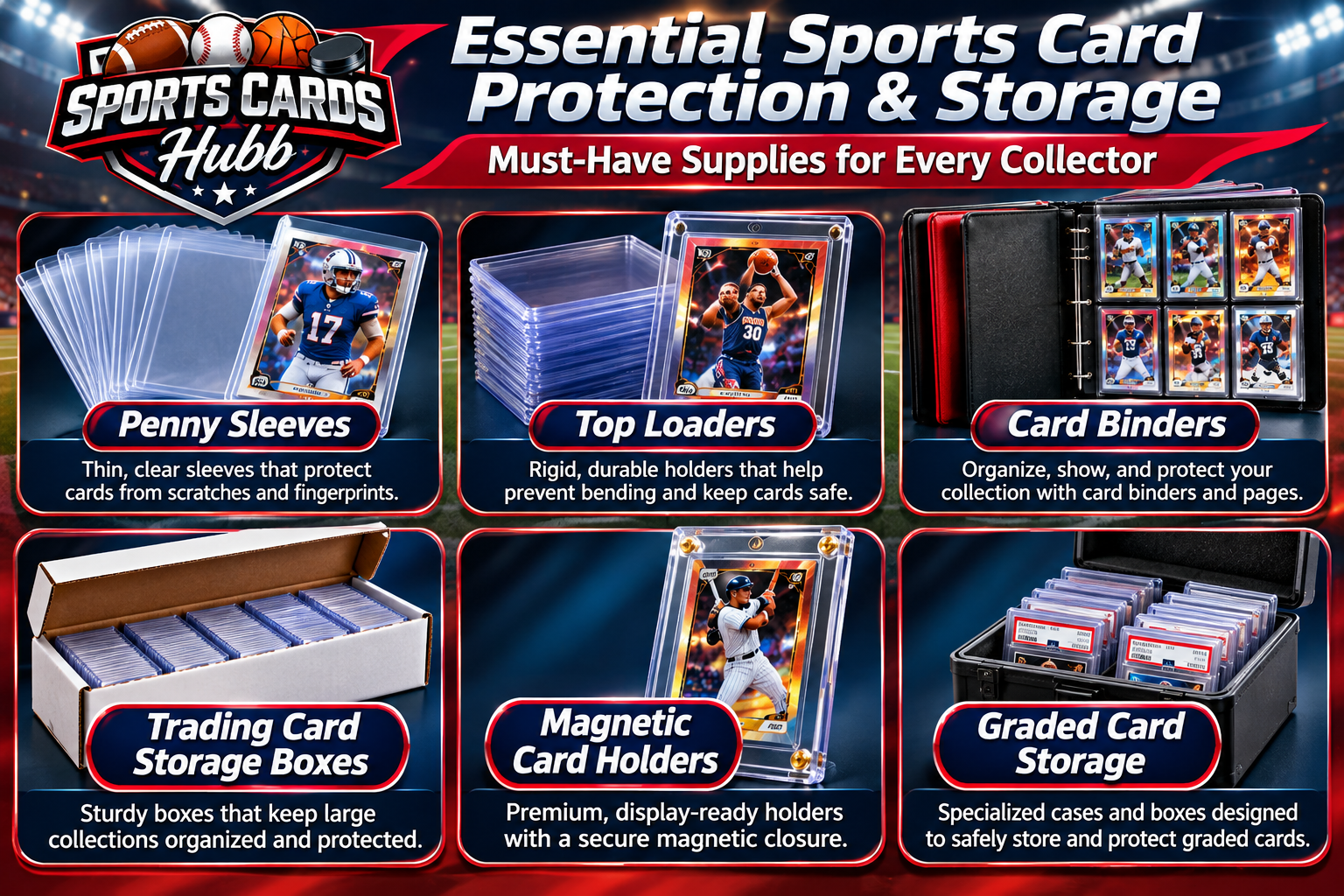
Essential Sports Card Collecting Supplies
Penny Sleeves
Thin, soft protective sleeves that help prevent fingerprints and surface scratches.
These are among the first accessories new collectors should purchase.
Top Loaders
Rigid plastic holders that offer additional protection against bending.
Place the card in a correctly sized soft sleeve before inserting it into a top loader.
Card Binders
Binders with card-safe pocket pages make it easy to organize and view your collection.
Look for archival-quality, acid-free, PVC-free materials, and avoid overfilling pockets.
Trading Card Storage Boxes
Boxes help store larger collections and keep cards organized by sport, team, player, or year.
Magnetic Card Holders
Rigid holders with magnetic closures are popular for displaying individual cards.
Select the correct thickness and use protective materials when appropriate.
Graded Card Storage
If you eventually purchase professionally graded cards, specialized cases and boxes can protect their sealed holders.
Tips for Keeping Cards in Good Condition
Handle cards with clean, dry hands.
Avoid touching the surfaces more than necessary.
Keep cards away from moisture and direct sunlight.
Store valuable cards in properly sized protective holders.
Avoid excessive heat and humidity.
Never force a card into a sleeve or holder that is too small.
Explore Sports Card Supplies: Discover sleeves, binders, top loaders, storage boxes, and other collecting accessories to help protect and organize your growing collection.
6. Understand What Makes a Sports Card Valuable
One of the most interesting parts of collecting is learning why some cards attract more interest than others.
Several factors can influence a card's market value.
Player Popularity: Cards featuring highly recognizable athletes or emerging stars may attract greater collector interest.
Rarity: Limited editions, low serial numbers, and scarce variations may command higher prices, depending on demand.
Condition: Cards without visible damage generally have an advantage over similar cards with noticeable wear.
Age and Historical Importance: Certain vintage cards are highly desirable because of their history, scarcity, or connection to legendary athletes.
Autographs and Special Features: Verified signatures, unusual inserts, and select memorabilia cards may attract additional interest.
Market Demand: A player's performance, popularity, and changes in collector interest can affect prices.
A card's age alone does not make it valuable, and a limited-edition card is not automatically worth a significant amount.
How Can You Find Out What a Card Is Worth?
Start by identifying the card's:
Year of release
Manufacturer and product line
Athlete and team
Card number
Parallel or variation
Condition
Grading company and grade, if applicable
Then research recent completed sales of the same card in comparable condition.
Remember that a seller's asking price is not necessarily the amount someone will pay.
7. What Does It Mean to Grade a Sports Card?
As you explore sports card collecting, you'll probably hear collectors talk about graded cards.
Professional card grading involves sending a card to a company that evaluates its condition and, as part of its service, may authenticate and encapsulate it.
Common grading factors include:
Corners: Are they sharp or worn?
Edges: Are they clean or damaged?
Surface: Are there scratches, stains, or other imperfections?
Centering: Is the printed design positioned appropriately on the card?
Companies such as Professional Sports Authenticator (PSA), Beckett Grading Services (BGS), and Certified Guaranty Company (CGC) offer card grading services.
Professional grading involves fees and processing time, and a high grade is never guaranteed.
Should You Grade Your First Cards?
For beginners, grading is usually optional.
Focus on learning the hobby, understanding card condition, and building a collection before spending money on professional grading.
Grading may be worth considering when a card has particular monetary, historical, or sentimental importance.
8. Organize and Track Your Collection
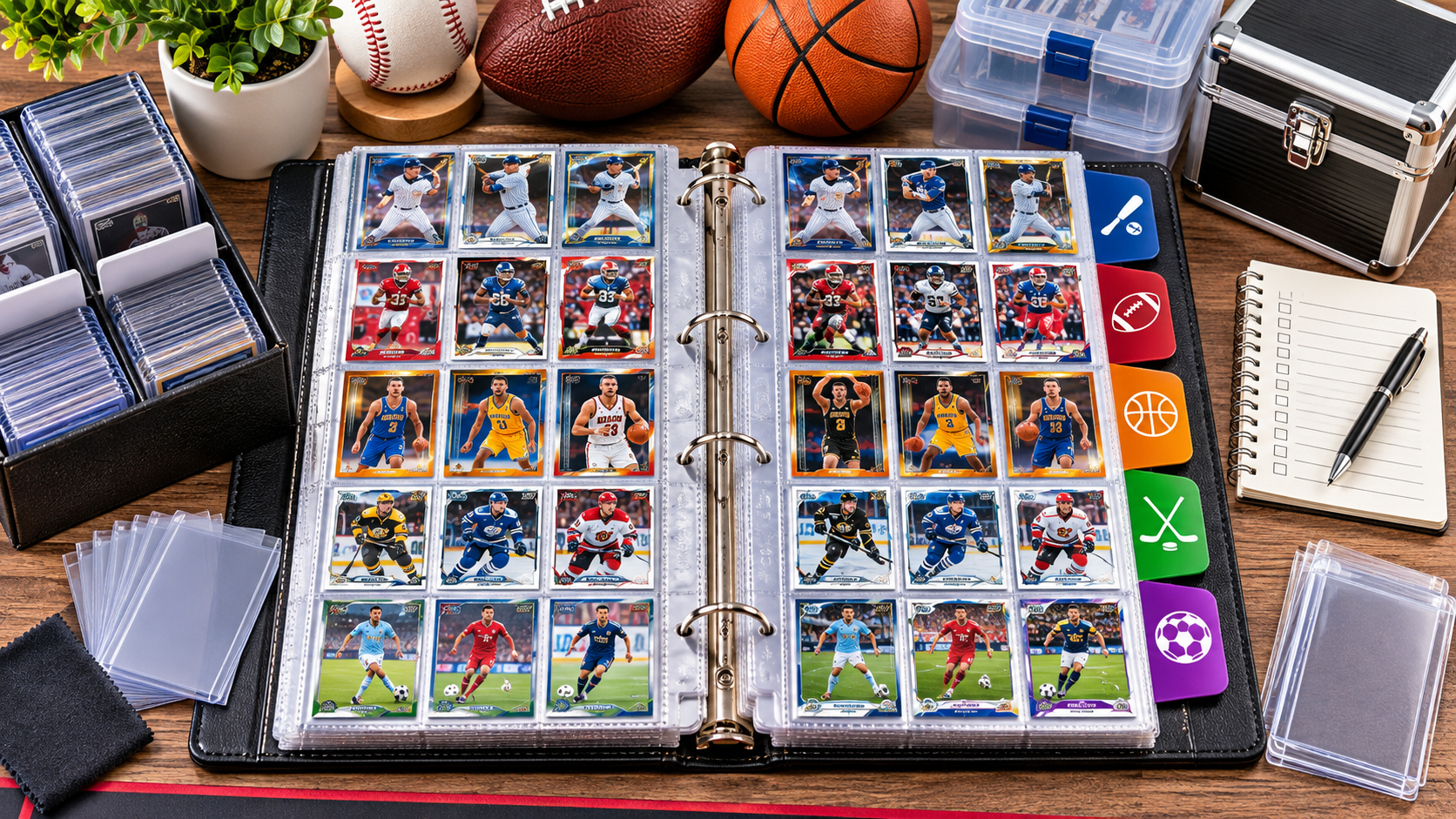
As your collection grows, you'll want a way to keep track of the cards you own.
Some collectors prefer physical binders. Others use spreadsheets or digital collection-management tools.
A simple collection inventory might include:
Information | Example |
|---|---|
Sport | Football |
Player | Favorite quarterback |
Team | Favorite NFL team |
Card Year | 2026 |
Card Type | Rookie, Base, Insert |
Manufacturer | Card brand |
Condition | Raw, Graded |
Purchase Price | Amount paid |
Storage Location | Binder 1, Page 3 |
Keeping an inventory can help you identify duplicates, remember purchases, plan future additions, and track your collection over time.
You can also create special categories for favorite players, championship teams, or cards you hope to find someday.
9. Make Sports Card Collecting a Family Activity
Sports card collecting can be a fun way for parents and children to share an interest in sports.
It also creates opportunities to learn useful skills.
Research: Learn about athletes, teams, sports history, and memorable achievements.
Organization: Sort cards by sport, team, player, year, or collection type.
Math: Practice budgeting, comparing prices, understanding statistics, and recognizing card numbers.
Decision-Making: Choose which cards are worth purchasing and which ones to pass on.
Responsibility: Learn how to care for belongings and keep a collection organized.
Families can even build collections together by following their favorite teams throughout the season.
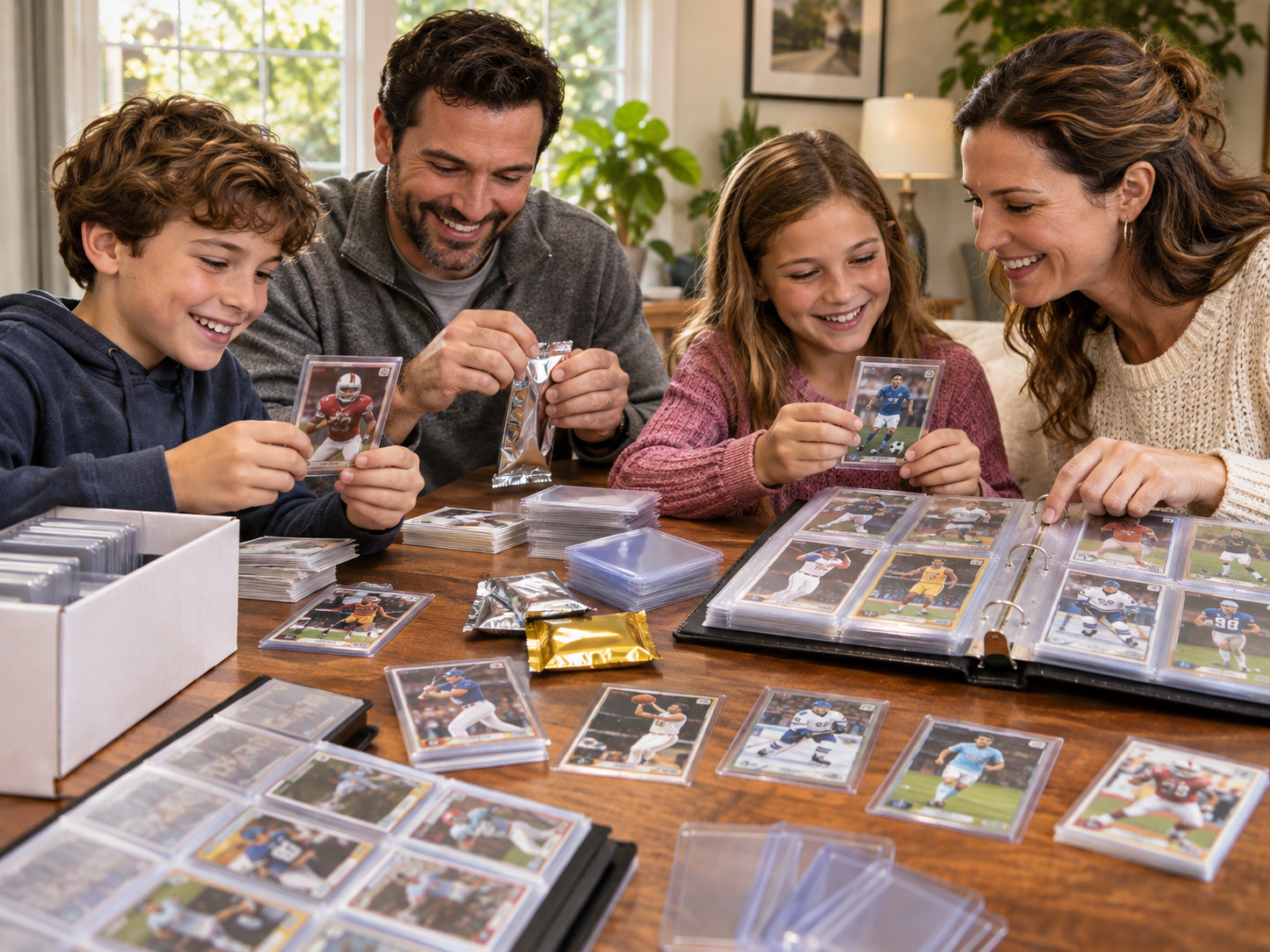
Imagine starting a football card collection when a child begins playing youth football, then adding cards of the players and teams they enjoy watching as their interest in the sport grows.
Over time, that collection can become a meaningful record of their sports interests and memories.
10. Grow Your Collection at Your Own Pace
There's no single correct way to collect sports cards.
Some collectors enjoy opening packs and discovering new players. Others carefully search for particular cards to complete a favorite team collection.
You might eventually explore vintage sports cards, professional grading, card shows, or collecting communities.
Or you might simply enjoy filling a binder with cards featuring your favorite athletes.
Your interests can change as you discover new sports, teams, players, and collecting opportunities.
The most important thing is that your collection reflects what you enjoy.
Ready to Start Your Sports Card Collection?
Starting a sports card collection doesn't have to be complicated or expensive.
Choose a sport, team, or player you love. Start with a few cards, learn about the different card types, protect your collection, and enjoy the process of discovering something new.
Whether you're collecting football, baseball, basketball, hockey, or soccer cards, every collection starts somewhere.
Explore Sports Cards Hubb at HubbServe for collecting tips, sports card information, accessories, and resources to help you discover and grow your newest interest.
🛒 Gear Up for Your Sports Card Collection!
Ready to start collecting or take your collection to the next level? Whether you're searching for sports trading cards, card packs, protective sleeves, top loaders, binders, storage boxes, or display cases, having the right supplies makes collecting even more exciting!
Explore our handpicked selection of sports card products and accessories to help you start, protect, organize, and grow your collection!
🏈 ⚾ 🏀 🏒 Your Collection. Your Passion. Your Hubb.
👉 SHOP SPORTS CARDS & COLLECTING SUPPLIES
Helpful Resources
Affiliate Disclosure: Some product links on HubbServe may be affiliate links. HubbServe may earn a commission from qualifying purchases at no additional cost to you.