Ultimate Guide to Youth Baseball Bats
Baseball, Youth Sports, Equipment Buying Guide
The Complete Family Guide to Buying a Baseball Bat: Types, Sizes, Certifications, and League Rules
Choosing the right baseball bat for your player can feel overwhelming. Between aluminum, composite, hybrid, and wood options, a maze of certification stamps, and league‑specific rules, it’s easy to spend a lot of money and still end up with the wrong bat. This guide breaks everything down in plain language so families and players in youth and competitive baseball can buy with confidence and stay within the rules.
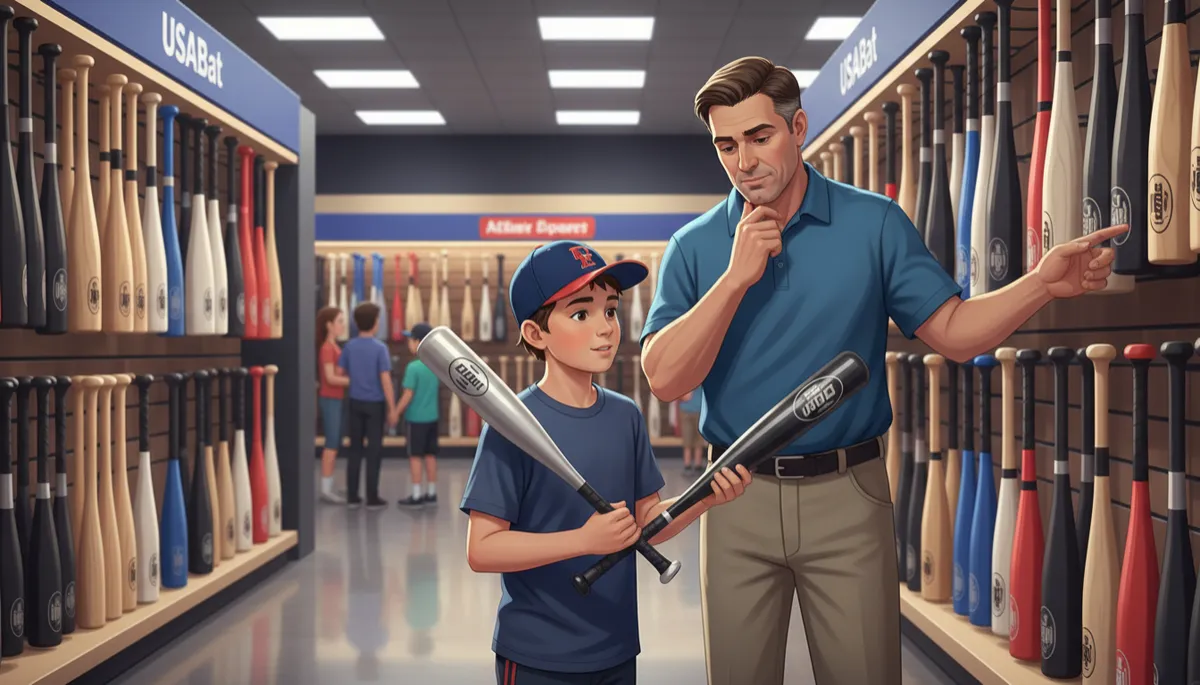
Choose the Right Baseball Bat with Confidence
Understand bat types, sizes, certifications, and league rules before you buy
1. Understanding Baseball Bats: The Basics Families Should Know
At its core, a baseball bat is a simple tool: a long, round piece of material used to hit a ball. But modern bats are carefully engineered around performance, safety, and league regulations. Every bat is defined by a few key characteristics:
Material: Aluminum (alloy), composite, hybrid (alloy + composite), or wood.
Length and weight: Measured in inches and ounces, with “drop weight” (length minus weight) indicating how heavy a bat feels to swing.
Barrel diameter: Commonly 2 1/4", 2 5/8", or 2 3/4", depending on level and league.
Certification: Stamps like USA Baseball, USSSA, or BBCOR that show the bat meets specific performance standards.
Understanding how these pieces fit together is the foundation for choosing the right bat for your child’s age, league, and skill level.
📌 Shop Gear: The right gear supports safe, confident play. Visit our store for starter gear and equipment at https://baseball.hubbserve.com/store.
2. Types of Baseball Bats: Aluminum, Composite, Hybrid, and Wood
Aluminum (Alloy) Bats
Aluminum bats, often called alloy bats, are made from metal blends. They are durable, usually ready to perform at full capacity right out of the wrapper, and often more affordable than high-end composites. They tend to have:
A slightly stiffer feel at contact and a classic “ping” sound.
Good durability, making them ideal for younger players and team bats.
A smaller sweet spot than many composites, but still plenty forgiving for most youth players.
Composite Bats
Composite bats are made from layers of carbon fiber and other advanced materials. They’re known for:
A larger sweet spot and more forgiving contact, which can help players square up more pitches.
Reduced vibration and sting on mishits, thanks to the material’s ability to absorb shock.
A need for break‑in time—many composite bats perform best after 100–200 quality hits.
Composite bats are often more expensive and can be more sensitive to very cold temperatures, which may shorten their life if used in winter conditions.
Hybrid Bats
Hybrid bats combine an aluminum barrel with a composite handle. The idea is to blend the strengths of both materials:
The alloy barrel offers immediate performance and durability.
The composite handle helps reduce vibration and improve comfort.
Hybrids can be a great middle‑ground choice for players who want some of the benefits of composite without the full price tag or break‑in period of a fully composite barrel.
Wood Bats
Wood bats are the traditional choice in professional baseball and are required in many wood‑bat tournaments and some older youth or high‑level travel leagues. Common wood types include:
Maple: Dense, durable, and stiff, offering a solid, powerful feel.
Ash: Lighter with more flex, giving a slightly whippier swing and a larger feel to the sweet spot.
Birch: A blend of features from maple and ash—firm but with some flex, popular for players transitioning from metal to wood.
Wood bats demand more precise hitting. Many coaches recommend using wood in practice to build better swing mechanics, even if your league allows metal bats in games.
📌 Shop Gear: Looking for a first alloy or wood bat to practice with? Visit our store for starter-friendly options.
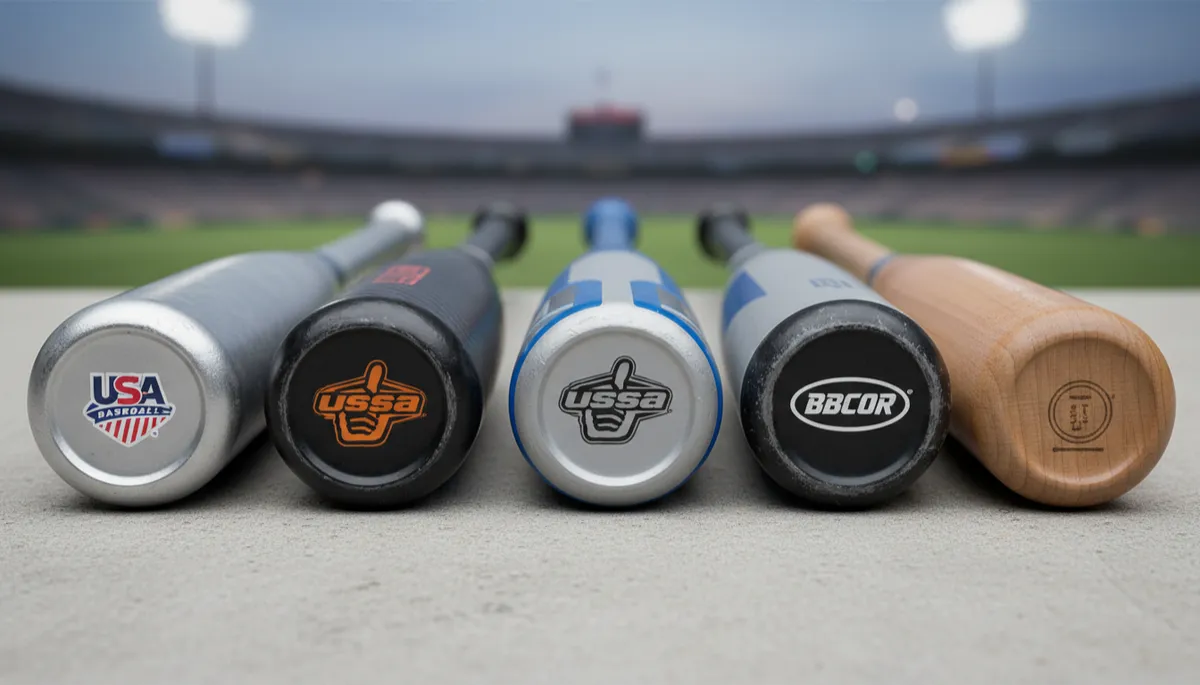
Comparing bat materials and certifications side by side makes rules and choices much clearer.
3. Sizes of Baseball Bats: Length, Weight, and Drop Explained
Bat size is more than just how long it looks on the rack. The key measurements are:
Length: Measured in inches, typically 26–32 inches for youth and 31–34 inches for high school and beyond.
Weight: Measured in ounces. Lighter bats are easier to swing; heavier bats can generate more power if the player can handle them.
Drop weight: The difference between length and weight (for example, a 30‑inch, 20‑ounce bat is a -10). Larger negative numbers mean a lighter bat for its length.
As players grow and get stronger, they typically move from higher drop weights (like -12 or -11) to lower ones (like -8, -5, and eventually -3 in high school and college BBCOR play). The right size allows the player to control the bat, maintain good swing mechanics, and make consistent contact.
📌 Shop Gear: Need a size guide plus age-appropriate bats? Browse curated options at https://baseball.hubbserve.com/store.
4. Certifications of Baseball Bats: Why Those Stamps Matter
Bat certifications exist to keep the game fair and safe. They limit how “hot” a bat can be—how fast the ball comes off the barrel. Most youth and competitive leagues require specific certification marks printed or engraved on the bat. Without the correct stamp, a bat can be ruled illegal even if it’s brand new.
USA Baseball Certification
The USA Baseball standard is used by many major youth organizations, including Little League, Babe Ruth/Cal Ripken, PONY, and others. USA Baseball bats:
Are designed to perform more like wood in terms of ball exit speed.
Usually have barrels up to 2 5/8" in diameter for youth play.
Must display a clear USA Baseball stamp on the barrel.
USSSA Certification
USSSA (United States Specialty Sports Association) bats are common in travel and tournament baseball. Compared with USA Baseball bats, USSSA bats generally:
Allow for higher performance and “hotter” barrels, especially in composite models.
Often come in 2 3/4" barrel diameters for more hitting surface (depending on age and league).
Must display the USSSA 1.15 BPF or updated USSSA stamp approved by the organization.
BBCOR Certification
BBCOR (Batted Ball Coefficient of Restitution) is the standard for high school and college baseball, and for some older‑age travel leagues. BBCOR bats:
Are limited to -3 drop weight (for example, 32"/29oz).
Have a maximum 2 5/8" barrel.
Must show a BBCOR .50 certification stamp.
BBCOR bats are designed to perform very similarly to high‑quality wood bats, creating a more balanced and controlled game at the upper levels.
📌 Shop Gear: Want bats that clearly show USA, USSSA, or BBCOR stamps? Check out vetted options at our store.
5. League Rules Regarding Baseball Bats: One Size Does Not Fit All
Every league sets its own bat rules, even when they use the same certification standard. Two 11‑year‑olds in different organizations might legally use very different bats. Common rule differences include:
Allowed certifications: Some leagues are strictly USA Baseball; others allow USSSA; older divisions may require BBCOR or wood only.
Barrel size limits: For example, 2 1/4" only, or up to 2 5/8", or specific rules for big‑barrel bats.
Drop weight limits: Some divisions cap drop at -10 or -8; high school mandates -3 BBCOR.
Because rules can change from season to season, it’s essential to check your league’s current bat policy—usually posted on their website—before you buy. Never assume last year’s bat is automatically legal this year, especially for players moving up an age division or into school ball.
📌 Shop Gear: Once you know your league rules, you can filter bats quickly. Start your search at https://baseball.hubbserve.com/store.
6. How to Choose the Right Bat: Balancing Size, Weight, and Certification
Step 1: Confirm Your League’s Certification and Rules
Start with what’s non‑negotiable: the certifications and specs your league allows. Check:
Which certification is required: USA Baseball, USSSA, BBCOR, or wood only.
Any barrel diameter limits (e.g., 2 5/8" max) and drop weight limits.
This instantly narrows your options and prevents you from even considering illegal models.
Step 2: Find the Right Length and Drop Weight for Your Player
Next, match the bat’s size to your player’s height, weight, and strength. General guidelines (always adjust for individual comfort):
Younger or smaller players (6–9) often use 26–29" bats with drops between -11 and -13 (depending on certification rules).
Pre‑teens (10–12) commonly move into 28–31" bats, with drops between -10 and -11 for USA or USSSA, and sometimes -8 as they grow stronger.
Teens transitioning to high school should prepare for -3 BBCOR, often starting with lighter BBCOR or heavier USSSA bats to build strength.
In‑store, a simple test helps: have the player hold the bat straight out to the side at shoulder height. If they can’t hold it steady for 10–15 seconds, it’s probably too heavy. A bat that’s too heavy leads to late swings, poor mechanics, and frustration.
Step 3: Choose the Material That Fits Your Budget and Needs
Once size and certification are set, consider the material:
Choose aluminum if you want durability, a lower price, and a bat that’s ready to go immediately.
Choose composite if you value a big sweet spot, less sting, and top performance, and you’re comfortable with break‑in and a higher price tag.
Choose a hybrid if you want a blend of comfort and durability at a mid‑to‑upper price range.
Choose wood if your league requires it or you want to develop a more precise swing.
📌 Shop Gear: Ready to put these steps into action? Explore bats by size, drop, and certification at our store.
7. League‑Specific Rules and the Importance of Verifying Certification Marks
Even within the same certification family, leagues can have unique rules. For example, one 12U travel league might allow USSSA big‑barrel bats, while another 12U division in a different organization requires USA Baseball only. Some high‑level tournaments mandate wood bats or BBCOR earlier than standard school rules.
That’s why it’s critical to physically verify the certification mark on the bat itself, not just rely on online descriptions or packaging. Look for:
A clear, permanent USA Baseball, USSSA, or BBCOR .50 stamp on the barrel or taper area.
Matching information in the manufacturer’s description and on the retailer’s product page, if buying online.
Umpires typically check bats before games or tournaments. If your player’s bat doesn’t have the correct stamp, it may be removed from play on the spot, leaving them scrambling to borrow a teammate’s bat—an avoidable stress for both player and parents.
📌 Shop Gear: Simplify things by choosing bats with clearly visible, league-ready stamps at https://baseball.hubbserve.com/store.
8. Common Mistakes to Avoid When Buying Baseball Bats
With so many options and strong opinions around bats, it’s easy to make missteps. Here are frequent mistakes families should avoid:
Buying “too big” to grow into: Oversized bats are hard to control and can actually slow development. Prioritize a bat that fits now, not three seasons from now.
Ignoring league rules: Purchasing a USSSA bat for a USA Baseball league, or vice versa, is one of the costliest and most common errors.
Chasing hype instead of fit: The “hot new bat” other kids use may not be right for your player’s size, swing, or league certification requirements.
Overlooking balance and feel: Two bats with the same length and weight can feel very different. End‑loaded bats can be harder for younger players to control than balanced bats.
Not checking return or warranty policies: Especially with composite bats, it’s important to understand the manufacturer’s warranty and the store’s return window before purchase.
📌 Shop Gear: Avoid costly mistakes by starting with beginner-friendly bats and clear product details at our store.
9. Comprehensive Bat Buying Checklist for Families and Players
Use this checklist before you click “buy now” or walk to the register. It brings together everything covered above so you can make a confident, informed decision.
A. League and Certification
Confirm the exact league or organization (e.g., Little League, local rec league, USSSA travel, high school).
Check the league website or rulebook for bat certification requirements (USA Baseball, USSSA, BBCOR, wood only).
Note any restrictions on barrel diameter and drop weight.
B. Player Fit: Size and Weight
Consider the player’s age, height, and weight and consult general sizing charts as a starting point.
Choose a length the player can swing comfortably without dragging through the zone.
Select a drop weight that allows the player to maintain control and bat speed (heavier is not always better).
C. Material Choice: Aluminum, Composite, Hybrid, or Wood
Decide whether you prefer aluminum for durability and value, composite for performance and comfort, hybrid for a blend, or wood for tradition and training.
Factor in your budget and how many seasons you realistically expect from the bat.
D. Balance, Feel, and Comfort
Have the player swing a few options (even without hitting) to compare balance and weight distribution (balanced vs. end‑loaded).
Consider grip thickness and handle feel—small hands may prefer thinner grips; others like more cushioning.
E. Certification Marks and Final Checks
Visually confirm the correct USA Baseball, USSSA, or BBCOR stamp on the actual bat barrel or taper area.
Double‑check that the length, weight, and drop match what you intended to buy—not just what was on the shelf label or website description.
Review the warranty and return policy in case the bat breaks early or doesn’t meet expectations.
📌 Shop Gear: Use this checklist while browsing bats and starter gear at https://baseball.hubbserve.com/store.
10. Bringing It All Together
Baseball bats may look similar on the rack, but once you understand the differences in types, sizes, certifications, and league rules, it becomes much easier to pick the right one. Aluminum, composite, hybrid, and wood bats each offer unique benefits; the key is matching those features to your player’s age, strength, and playing environment, while always respecting league standards like USA Baseball, USSSA, and BBCOR.
By verifying certification marks, avoiding common sizing and rule‑related mistakes, and using a clear buying checklist, families can turn a confusing purchase into a confident investment in their player’s development. A well‑chosen bat won’t magically turn a beginner into an all‑star—but it will give them a fair, safe, and comfortable tool to grow their skills and enjoy the game for seasons to come.
📌 Shop Gear: The right gear supports safe, confident play. Finish your research by exploring bats, helmets, and starter bundles at https://baseball.hubbserve.com/store.