Turn Your Interest into a Profitable Online Presence
How to build, grow, and monetize your digital content through advertising, followers, affiliate marketing, sponsorships, products, and more.
Introduction: Turning Your Passion Into an Opportunity
Almost everyone has something they enjoy doing, learning about, or sharing with others. Whether you are a sports enthusiast, parent, hobbyist, creative professional, gamer, technology expert, or someone who loves recommending great products, your interests could become the foundation of a profitable online presence.
The internet allows people to build audiences, share knowledge, recommend products, and generate income without owning a traditional storefront. But launching a website or social media account does not automatically generate revenue. A profitable online presence requires useful content, audience engagement, visibility, trust, and the right monetization strategies.
Some people earn income from advertising. Others receive affiliate commissions, collaborate with brands, sell digital downloads, or provide paid services. Many businesses combine these approaches. You do not need millions of followers to begin; you need a clear direction and something your audience values.
Step 1: Identify Your Interest, Audience, and Niche
Choose what you will share and whom you want to reach. A niche connects your content to a recognizable group of people and makes it easier to recommend relevant products and services.
• Sports and athletics: training tips, equipment guides, highlights, and skill development.
• Arts and creativity: tutorials, DIY projects, crafts, photography, and designs.
• Technology: product reviews, software tutorials, gaming, and troubleshooting.
• Lifestyle: home improvement, gardening, pets, cooking, beauty, and outdoor interests.
• Education and professional knowledge: study resources, instructional content, and career guidance.
For example, a gymnastics creator might share practice tips and later offer equipment recommendations, downloadable activity books, or training resources. Find the connection between what you enjoy sharing and what others find useful.
Step 2: Establish Your Online Presence
Create places where people can find and follow your work. You do not need to be on every platform; start with a combination you can maintain consistently.
• Website or blog: a central place for articles, resources, recommendations, downloads, and sales.
• Social media profiles: Facebook, Instagram, TikTok, YouTube, and Pinterest can help people discover and engage with content.
• Email newsletters and communities: with appropriate consent, provide a way to reconnect with interested visitors beyond algorithm-driven feeds.
Keep your branding consistent, write clear profile descriptions, and connect your online destinations. Social platforms can introduce new people to your content while your own site provides a more organized home for it.
Step 3: Create Content That Attracts and Retains Visitors
Effective content educates, entertains, or solves a problem. Aim for a mix of educational guides, videos, practical product reviews, downloadable resources, and community discussions.
• Educational articles: how-to guides, comparisons, tutorials, and explanations.
• Video: demonstrations, short clips, behind-the-scenes experiences, and product showcases.
• Product reviews: honest information about who a product is suited for and why.
• Digital resources: printables, activity books, training logs, templates, and planners.
• Community content: questions, polls, shared experiences, and discussions.
A football creator might publish an equipment guide, share drill videos, and offer a printable player stat book. Each piece supports a different goal: discovery, engagement, or a potential sale. Use descriptive titles, relevant headings, internal links, and search engine optimization (SEO) to make valuable content easier to find.
Step 4: Build an Audience and Grow Your Followers
Follower count is not the same as profitability. A small, engaged audience focused on a topic can produce more meaningful results than a large audience with little interest in your offers. Post consistently, engage with relevant comments, collaborate thoughtfully, and give people reasons to return.
Followers are people interested in your ongoing content; visitors are people accessing your website or posts; and customers are people making purchases. Your strategy should help people move from discovery to engagement to useful action - without assuming every follower will become a buyer.
Step 5: Choose How to Monetize Your Online Presence
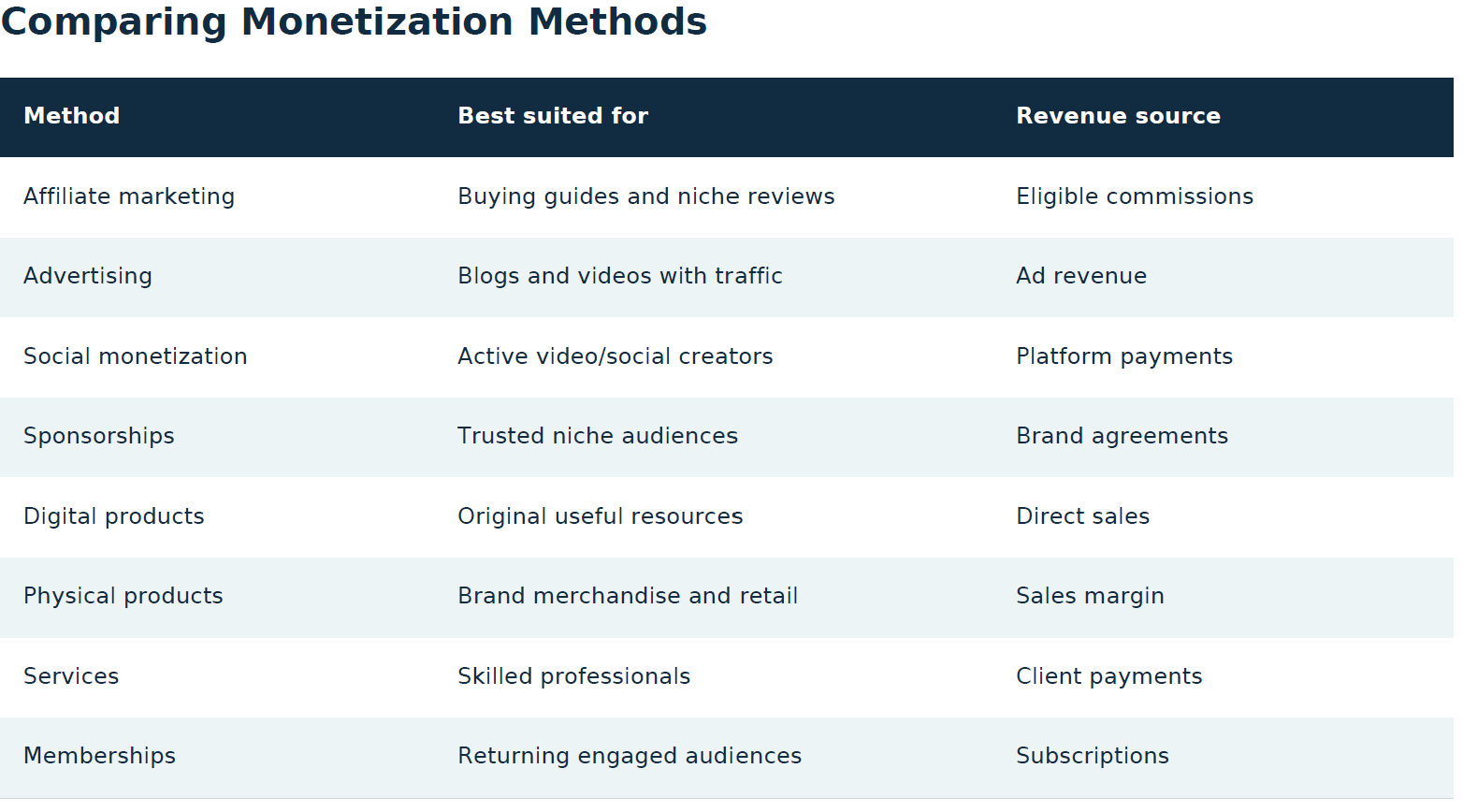
Method 1: Affiliate Marketing
Affiliate marketing lets you recommend products or services through specially tracked links. When an eligible purchase or other qualifying action occurs, you may earn a commission. You generally do not need to manufacture or ship the item.
• Apply to a relevant affiliate program and review its terms.
• Use tracking links in suitable guides, comparisons, or recommendation pages.
• Explain why a product is useful and disclose your affiliate relationship.
• Track qualifying conversions and commissions.
Examples include retailer programs and networks such as Amazon Associates, Awin, CJ Affiliate, and impact.com. Programs vary in approval requirements, commissions, attribution windows, exclusions, and payment schedules. Practical niche buying guides are often a natural fit.
⚠️ Friendly note: Always be transparent when you earn a commission. People appreciate honesty, and it builds long‑term trust.
Method 2: Website and Video Advertising
Advertising may generate income when ads appear alongside eligible website or video content. Depending on the program, revenue can be influenced by impressions, clicks, audience geography, content category, and advertiser demand. Google AdSense is one example for eligible websites; YouTube offers advertising opportunities to eligible creators under its Partner Program.
Advertising is often more useful after traffic becomes consistent. Buying advertising to bring people to your content is different: that is a marketing expense, not a revenue stream.
Method 3: Social Media Monetization
Eligible creators may earn through platform advertising programs, creator rewards, subscriptions, livestream gifts, shopping integrations, or paid content features. Availability and thresholds differ by platform, region, and account standing and change over time. A high follower count alone does not guarantee eligibility or earnings.
Method 4: Sponsored Content and Brand Partnerships
Brands may pay creators to feature relevant products in posts, videos, articles, photographs, or newsletters. Compensation might be a negotiated fee, gifted products, an affiliate arrangement, or a combination. A focused audience can be attractive even if it is not huge.
Put terms in writing, including deliverables, payment, posting dates, approvals, content usage rights, and disclosure expectations.
⚠️ Friendly note: Always be transparent about sponsored content and paid brand partnerships. Choose brands that align with your interests, values, and audience, and keep your recommendations genuine. Honesty and authenticity help build trust, strengthen credibility, and create lasting relationships with your followers.
Method 5: Digital Products and Downloads
Sell resources you create, such as e-books, sports stat books, printable activity books, planners, templates, original artwork, training logs, courses, and checklists. Digital goods can be sold repeatedly without individually shipping physical inventory, though design time, fees, support, and maintenance still have costs.
Free educational content can introduce a topic, while an optional paid resource offers additional depth or convenience.
Method 6: Physical Products and Merchandise
Creators may sell apparel, accessories, equipment, or other products related to their niche. Common approaches include holding inventory, print-on-demand, dropshipping, and curated affiliate storefronts. They differ in responsibility for fulfillment, returns, quality, costs, and profit margins.
Method 7: Services, Coaching, and Consulting
If you have marketable skills, your content can introduce services such as design, photography, web development, tutoring, writing, editing, technology consulting, workshops, or qualified coaching. Service revenue can begin with a relatively small audience when the services address clear needs.
Method 8: Memberships and Subscriptions
A loyal audience may value premium articles, exclusive videos, resource libraries, workshops, private communities, or regular downloads. Platforms such as Patreon can support subscriptions. Recurring revenue requires consistent delivery of benefits that members are willing to keep paying for.
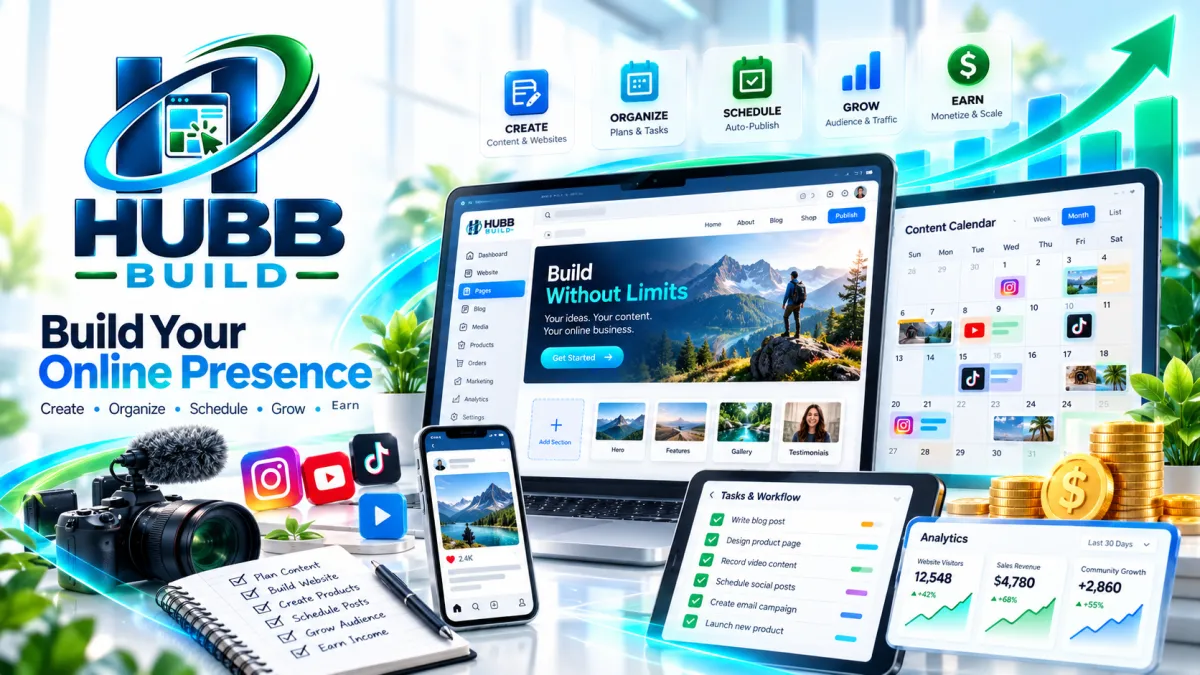
📌 Find the Right Tools to Build, Manage & Grow Your Online Presence: Make managing your digital world easier with tools and resources designed to help you stay organized, connected, and in control. Whether you're building a website, managing domains, scheduling content, backing up social media posts, creating calendar invites, or automating everyday tasks, discover solutions that save time and simplify your workflow. From launching your first website to managing multiple platforms, Hubb Serve helps you explore tools that support your interests, streamline your content, and grow your online presence—all in one place. Shop Hubb Serve: https://build.hubbserve.com/store
Step 6: Understand How Traffic Turns Into Revenue
Traffic alone does not determine income. Visitors who are actively researching a purchase may be more likely to follow a relevant recommendation than visitors casually browsing. To evaluate affiliate opportunities, look at visits, link click-through rates, purchase conversion rates, order values, and commission rates.
Illustrative example: A site gets 5,000 monthly visitors. If 10% click an affiliate link, that is 500 clicks. If 3%of those clicks become eligible $60 purchases and the program pays 5%, that is 15 sales at $3 commission each - or $45 in illustrative monthly commissions, before expenses and any program adjustments. This is not an earnings forecast.
Step 7: Build Multiple Income Streams From the Same Content
One well-written article can support more than one appropriate revenue opportunity. A youth football equipment guide could contain affiliate recommendations, host eligible display ads, offer a printable checklist, and potentially attract a relevant sponsor. Supporting social videos and newsletters may lead more interested visitors to that article.
Multiple streams can reduce dependence on one platform or program. Keep the user experience first: too many ads or promotional links can make even valuable content difficult to enjoy.
Step 8: Track Performance and Improve What Works
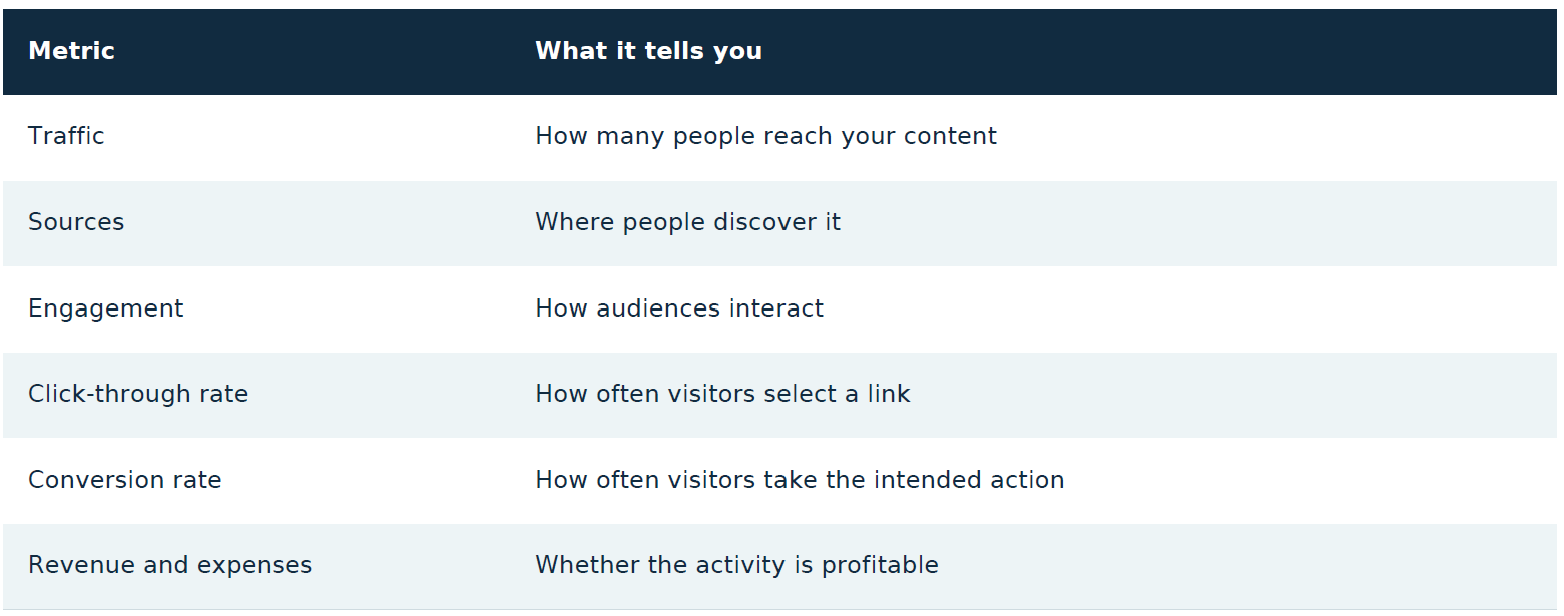
Monitor website visitors, sources of traffic, follower growth, engagement, affiliate clicks, conversions, revenue, expenses, and net profit. Google Analytics, Google Search Console, platform dashboards, and affiliate reporting can help identify which topics and offers perform well.
Look for patterns. If product comparisons drive qualified clicks, publish more useful comparisons. If downloadable resources perform best, consider additional original resources that meet similar needs.
Step 9: Protect Your Audience’s Trust and Your Business
Affiliate commissions, free products, sponsorships, and other material brand relationships may require clear disclosures. The U.S. Federal Trade Commission advises that relevant connections should be disclosed in ways viewers can easily notice and understand, near the related endorsement.
Example disclosure: “This article contains affiliate links. We may earn a commission from qualifying purchases made through these links, at no additional cost to you.”
Also consider privacy and tracking requirements, copyrights, platform policies, applicable taxes, business expenses, and agreements with advertisers or networks. Never recommend a poor-fit product simply because it pays a higher commission.
Step 10: Develop a Long-Term Growth Strategy
Scale deliberately: improve search visibility, keep older articles accurate, build new resources around topics your audience values, test suitable revenue streams, and expand into related niches only when it serves visitors.
A Practical 90-Day Starting Plan
• Days 1–30 - Build: Choose your niche, identify the audience, establish profiles or a website, and publish an initial set of genuinely helpful resources.
• Days 31–60 - Grow: Publish consistently, improve SEO, connect with relevant communities, and identify content that earns attention.
• Days 61–90 - Monetize: Evaluate appropriate affiliate, digital product, or service opportunities; check program eligibility; make disclosures; and track outcomes.
The 90-day structure is a planning framework, not a guarantee of income. Building sufficient trust or traffic may take longer.
How Hubb Serve Can Support Your Journey
At Hubb Serve (hubbserve.com), we believe interests can become opportunities to share knowledge, connect with others, develop content, promote products, and potentially earn income. The Hubb Serve experience is organized around four pathways:
• Explore: Discover interests, relevant Hubbs, content, products, and resources.
• Share: Grow visibility by sharing knowledge, experiences, and opportunities to be featured.
• Build: Establish content, a website, a storefront, or another digital destination.
• Earn: Explore affiliate recommendations, digital products, promotion, and other suitable monetization approaches, subject to applicable terms.
You do not have to begin as a professional creator. Start by exploring something you enjoy, sharing what you know, and building from there.
Final Thoughts: Build Something Valuable Before Expecting Profit
A sustainable online presence begins with value. Create content that helps people learn, make decisions, solve problems, or discover new interests. Then select revenue methods that are a natural fit for that content and your audience.
Affiliate marketing can turn useful recommendations into commissions. Advertising can support sites with appropriate traffic. Sponsorships can connect creators with brands. Digital products and services can turn experience and creativity into things people buy. Each method has its own work, requirements, and risks.
You do not need to monetize everything immediately. Start with one interest, one audience, and one opportunity - and build from there.
📌 Ready to take the next step? Want to get a featured profile to showcase your interests and link to your content, or learn about building a more dedicated presence with Hubb Serve. Join Hubb Serve to bring your interests, content, recommendations, and online presence together in one place. Whether you want to share, build, grow, or earn, you can join Hubb Serve and start building your online presence today.