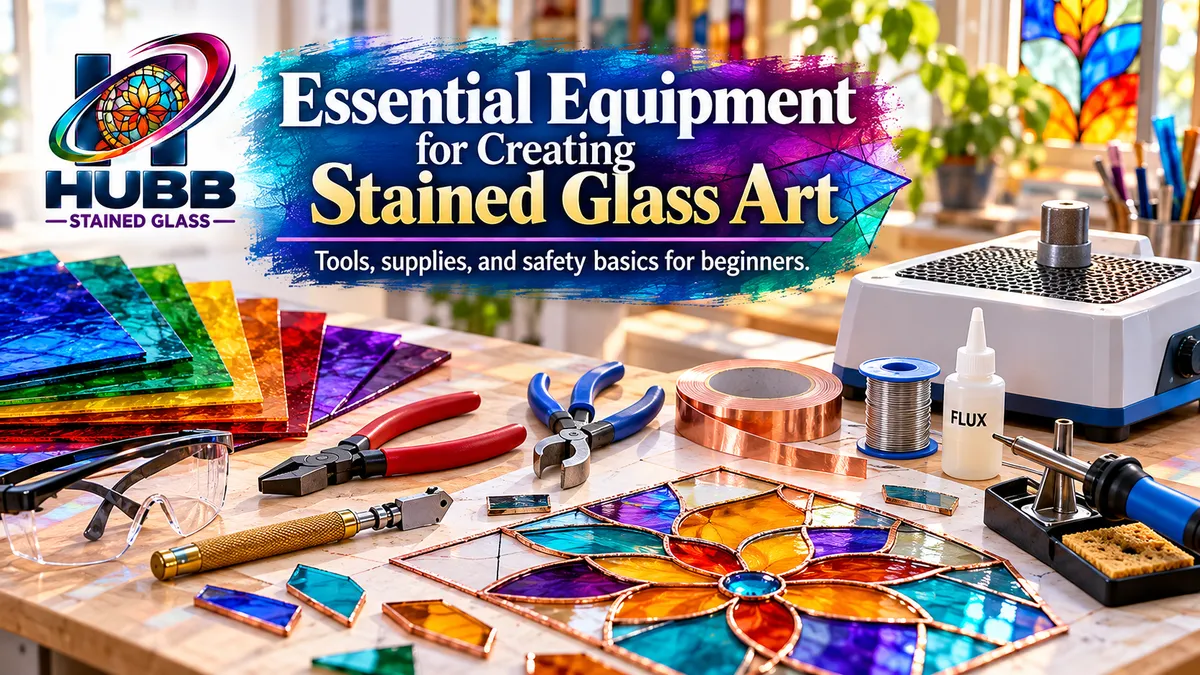
Essential Equipment for Creating Stained Glass Art
A practical beginner’s guide to tools, materials, techniques, safety, and setup costs
Creating stained glass art requires specialized tools for cutting, shaping, assembling, and finishing glass. Whether you are making suncatchers, decorative panels, windows, ornaments, or custom artwork, your equipment needs depend on the construction method you choose.
Choose a technique
Copper foil (Tiffany method) is especially suitable for beginners, small decorative pieces, and intricate designs. The lead came method is often used for traditional panels and larger windows, with additional framing and cementing supplies.
Six essential items
1. Glass cutter
Scores glass along pattern lines so it can be broken into the required shapes. Options include pistol-grip, pencil-style, and oil-fed cutters.
2. Running and grozing pliers
Running pliers help separate glass cleanly along score lines. Grozing pliers remove small pieces and adjust edges.
3. Glass grinder
A water-cooled diamond grinder smooths edges and improves the fit of shaped pieces.
4. Copper foil tape
Adhesive-backed copper foil wraps each glass piece to provide a surface for solder to bond to.
5. Soldering iron and solder
A stained-glass-capable, temperature-controlled iron joins prepared pieces. Many makers use 60/40 tin-lead solder, while lead-free alternatives are available.
6. Stained glass sheets
Select from transparent, opaque, textured, iridescent, and other specialty finishes to create color and visual effects.
Complete equipment checklist
Category | Equipment and supplies |
Design and patterns | Pattern paper, markers, ruler, pattern shears, light box |
Glass cutting | Glass cutter, cutting oil, cutting mat |
Glass shaping | Running pliers, grozing pliers, glass grinder |
Assembly | Copper foil tape, foil burnisher, layout board, positioning pins |
Soldering | Soldering iron, stand, solder, stained glass flux, flux brush |
Finishing | Flux cleaner, patina, polishing compound, soft cloths |
Framing | Zinc came, lead came, U-channel, hanging rings, copper wire |
Safety | Safety glasses, cut-resistant gloves, local fume extraction, HEPA cleanup tools |
Equipment for more advanced projects
For larger windows, lamps, and commissioned pieces, artists may use lead came stretchers, lead knives, horseshoe nails, glazing cement, glass saws, circle cutters, special grinder bits, and reinforcing bars. Lead came work also requires came, a lead knife, appropriate assembly equipment, and finishing materials.
Safety essentials
Work with eye protection and appropriate cut-resistant gloves when handling glass. Control airborne glass dust and collect fragments safely. Use effective local fume extraction when soldering, follow flux and solder manufacturers’ safety instructions, and keep food and drinks away from the workspace. Lead-containing solder or came requires especially careful hygiene, dedicated tools and surfaces, and proper waste handling. Wash your hands after handling materials.
Estimated beginner equipment budget
Setup | Approximate cost (USD) |
Basic beginner tools and supplies | $150–$300 |
Beginner setup with glass grinder | $300–$500 |
More complete home studio | $500–$1,000+ |
Cost ranges are rough planning estimates, not current vendor quotes. Costs depend on glass selection, tool quality, and what is included in a kit.
Where to start
Start with the copper foil method and a small suncatcher. Choose a beginner kit with essential cutting, assembly, and soldering tools. A glass grinder is a valuable early upgrade for neater fit and more consistent results.
Shopping categories for a stained glass store
Glass & Materials • Cutting & Shaping Tools • Soldering Equipment • Assembly Supplies • Finishing Products • Safety Gear